

Before I knew I was going to be running behind on my BYOB project, I’d already signed up for this writing class/workshop/book discussion group covering Julia Cameron’s The Vein of Gold. I have done a book by Julia Cameron before, many many years ago, called The Artist’s Way, and then several years ago, I also went through her book Blessings. So I was pretty sure I was going to enjoy this when I saw it come up as an option on one of my book groups.
Today’s the first day the group is meeting (and coincidentally also the kids first day back to school). I just discovered that, sadly, I’m already a little bit behind. Apparently a calendar went out over the weekend when I wasn’t paying attention to the group yet, starting daily personal activities last Sunday. Ah well, it looks like it should be pretty easy to catch up, as I actually already have a Morning Pages and Daily Walk habit. I just have to catch up on the very small amount of reading. 🙂 I cannot wait to get started!

In week four of our UU Spiritual Practices class, we covered prayer. From a UU standpoint, prayer is not necessarily to someone or some being, it is a way of being conscious of what is active in your heart. Basically, every day ask “Where is my spirit?” and pray from that answer. If you absolutely cannot think of anything, some things to pray about could be: what you’re thankful for, what help you need, what amazes you.
A book was suggested: “Prayers for people who don’t think they can pray”
We did model prayers together. Some of my prayer started like this: “Thank you for my family and friends who are like family. Thank you for a safe home and enough to share with others. Help my friends to feel like they are enough and that they are not so alone with their burdens.”
Bits of prayers from others that I plan to incorporate into my prayer life:
“Help me listen to the many different sides of everyone’s stories and needs.”
“Help me remain open to the knowledge and wisdom of others, even if I think they’re wrong in some things.”
Another one of Julia Cameron’s big things is taking yourself on an Artist Date. Julia describes them thusly: “The Artist Date is a once-weekly, festive, solo expedition to explore something that interests you. The Artist Date need not be overtly “artistic”– think mischief more than mastery. Artist Dates fire up the imagination. They spark whimsy.”
A bajillion years ago when I did my first Julia Cameron experience, I had no kids, I lived in a big city, I wasn’t immunocompromised, and there was no pandemic going on. So there are big changes in the here and now version of my life.
I’m really not leaving the house much these days. I go on walks around the neighborhood, the grocery store occasionally, and Wal-mart even less often than that. Not much more than that. So Artist Dates are hard to imagine right now. Fortunately, the group I’m doing this with is awesome and came up with a list of alternate ideas for artist dates, some of which I’ll share below:
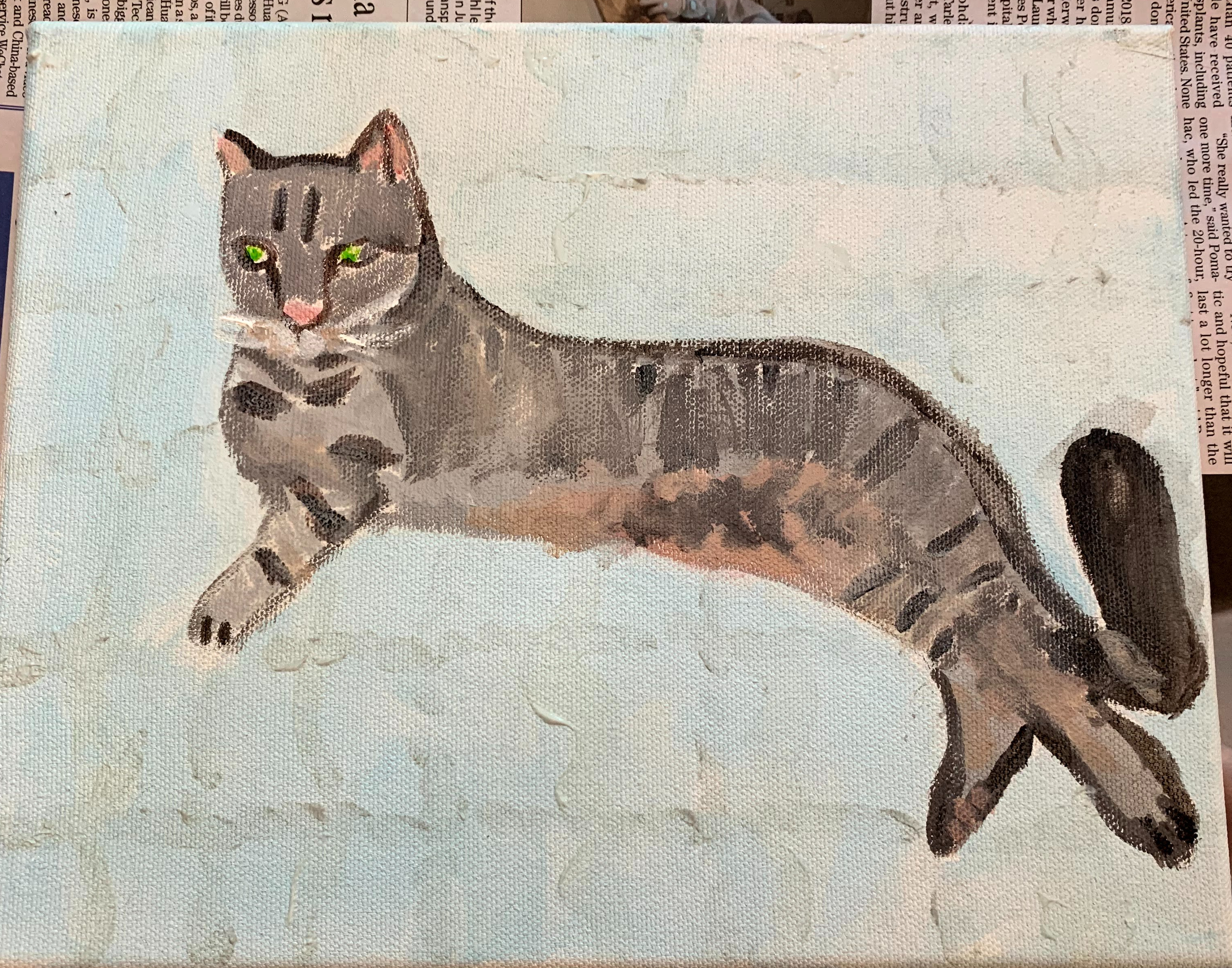
For this week, I did an Artist Date with my youngest son. We painted “pawtraits” of some local rescue cats as part of a charity fundraiser to raise money for O’Malley Alley Cats in Tyler (the group we fostered for this spring and summer).


So this week in Spiritual Practices class we covered “Keeping the Sabbath.” If you know me well, you know the phrase “keeping the Sabbath” weirds me out. I spent a long time trying to shove my big round self into the little square hole of my husband’s religion and “keeping the Sabbath” and “keeping the Feasts” where big phrases in his church community. It really makes me shudder.
With the Unitarian Universalists, keeping the sabbath seems to be an easy affair. It can be done any day or any time. It doesn’t even have to be all day, apparently.
What is a Sabbath practice? The Hebrew root of Sabbath is a word that means “to cease.” So the big question here is: What do we want to turn off in our lives to make a Sabbath? What do we change from our regular lives?
For me, a Sabbath looks like turning off a lot of my responsibilities. I don’t do PTA or volunteer work on a Sabbath, nor do I attempt to get any serious writing done. If a great writing thought comes to me, of course I’ll write it down, but I won’t sit in front of my screen with my mind on my plan and my plan on my mind.
In thinking about it a while, what I realized is that I need more than just not doing things, though. I need things to do. So I thought about it a little more and decided that the things I could do that would make the Sabbath a little cozier were adding in good music, making gratitude lists, reading from my spiritual books, and spending time on self care that I don’t usually get to during the main part of the week (like fun nail polish or teeth whitening or other spa like treatments).
What are some things you do to make your Sabbath a great experience?

This is week two of my Spiritual Practice Class. This week we talked about our spiritual practices in terms of what we do when, and where we do it all.
In terms of Daily Practice, we discussed different kinds of mediation, like breathing exercises, journaling, or praying. We talked about going to a place with permission to not be distracted. Safe spaces, basically, which lead to a discussion of places we found safe throughout our lives.
For me, the spaces I found safest were places my mom couldn’t get to me easily. I was that kid that was always off hiding somewhere, usually curled up with a book. In Nebraska, it was usually up in the tree in the front yard. My mother hated that. She and the neighbor across the street would usually meet nearby to have a venting session and she hated to find out that I’d been listening the entire time. Which I really wasn’t, because of the aforementioned book. Once we moved to Texas, I didn’t have a good climbing tree any more. But we got a pool a couple years after the move and I found that I loved to swim. I’d swim in any season. My hair turned green and my mother would have to beg me to get out and come back inside (which cracked me up after her years and years of begging me to go out and play).
Where do you go to find sanctuary? Is it a person or is it a place?
I get emails all the time from various writers trying to sell their latest books about writing, writing courses, etc. Sometimes they are full of interesting things, sometimes not so much. Today’s message from bookfox.co caught my eye sent me down this rabbit hole:
Write down your favorite album, your favorite movie, and your favorite artwork.
Now answer a few questions about these selections:
What do your answers have in common?
What kind of art are they?Why do these pieces of art, above all else, move you?
Now to figure out what this means. What do your answers tell you about the type of writing you should produce?
My answers:
Favorite album: Nomads, Indians, and Saints by the Indigo Girls
Favorite movie: Sliding Doors
Favorite artwork: Van Gogh’s Starry Night
What do these things have in common? I chose them all during my college years. They all represent a time to me when I was first starting out, making my first decisions away from my parents, living on my own for the first time. And even with twenty years in between those days and now, I still love them. I still think about them as some of the first things that were really, truly my things.
Other things they have in common is a certain amount of wildness and inconsistency, some questioning of reality, a journey to find what really is true about the world. Those are still things I’m thinking about today, even though some of my thoughts on those subjects have changed, my quest for truth in the world has not. I’m still striving for my own authenticity in a world that wants me to be just like everyone else. But not I can see how different everyone else really is and see what that means in their lives. My world has expanded so much since then.
The next part of the email made me realize that I’d gone off the intended path of the lesson at hand for the day, but that’s okay. I like the answers I found.
I started this document ages ago and have shared it with many friends, family members, and FB forums already. It’s compiled from many, many different places: lists on facebook, travel websites, space websites, family websites, school websites. It’s broken down into categories for ease of use: The Arts, Books, Celebrities, Coding, Crafts, Disney, Exercise, Food, Movies/TV/ Mental Health, Museums, Music, School Related, Travel, and Non-Internet Things to Do.
Hope you enjoy it. Here’s the link.
School got out a couple weeks ago, but my family has been taking a little staycation. I spent some time working on my summer plan for the kids. With summer camps being out of the question, we went back to the drawing board and decided we were going to do another summer of themed days. We’ve done them off an on for years and I first wrote about them here and here.
A lot has changed since then– we’re down to two children at home now, both teens, the internet can be viewed on the big TV in the living room, and free videos abound about far more subjects than we’ll ever have time to watch.
Here’s a link to this year’s list of themes. I’m updating them weekly on Sunday mornings, usually. Feel free to download and change for your own needs. 🙂
Before all this happened, I didn’t really think of my life as boring. I had my monthly family events (one for each extended family), weekly church, weekly writing groups, biweekly writing groups, PTA board meetings and events, kids marching band events and band concerts, and weekly dates with my husband. I feel like I normally have a really full, busy life. Then I started reading post after post from other people about what they missed in their lives: regular live music events (not involving their children), daily or weekly visits to restaurants or bars with friends, art shows, ballet, opera, races, festivals, farmers markets, fancy charity events, parties, etc. I realized that my life really hasn’t changed that much since we started socially isolating and “wow, my life is so boring.”
Some changes I’d like to make: